

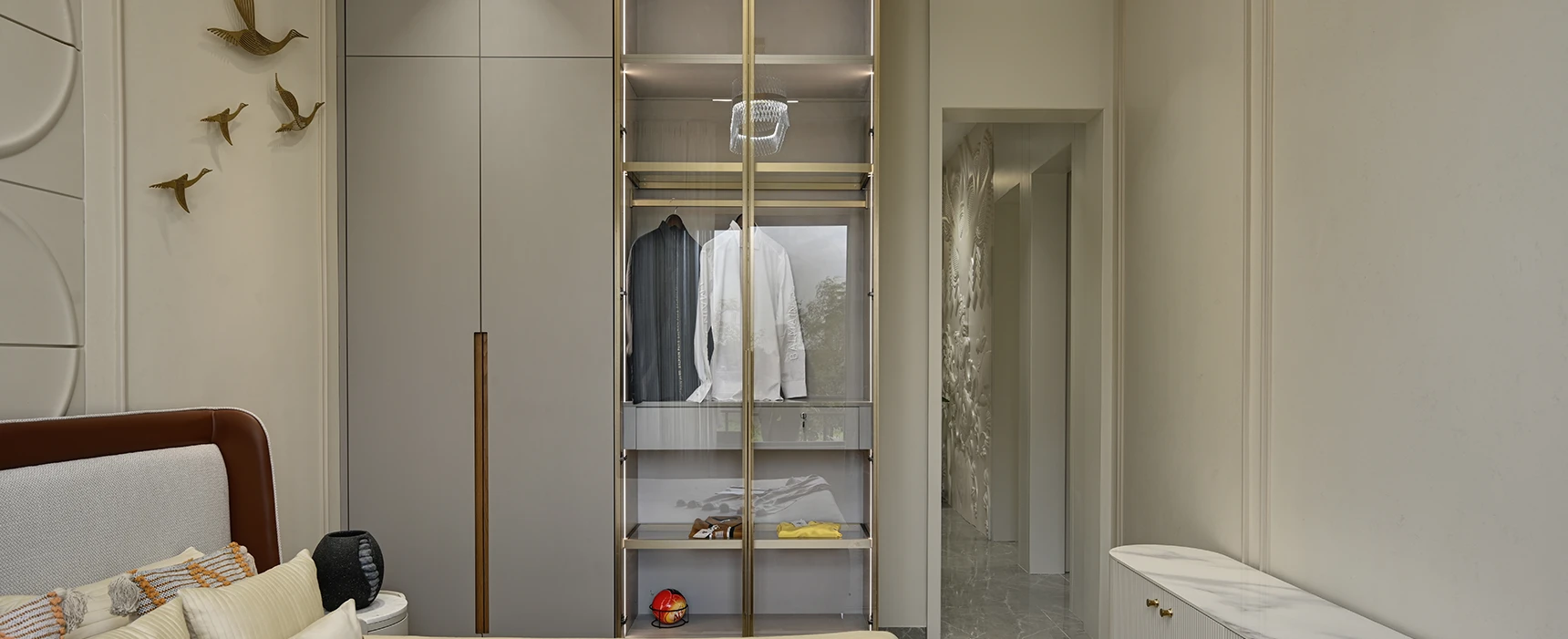
A wardrobe might seem like a simple decision, until the room starts to feel off. Too tall, and the ceiling feels lower. Too wide, and you lose movement. Not enough storage, and things pile up fast.
That’s why planning a wardrobe is more than picking a design. It’s about understanding the room it’s meant for.
Start with layout. Think about where the wardrobe will sit, how close it is to the bed, how much walking space it leaves. The ideal fit feels invisible, it holds everything but never gets in the way.
Next, think about how you live. A shared space may need split compartments. A daily-wear rotation might need more hanging room than drawers. What gets used often should stay accessible. What’s seasonal can stay tucked away. It sounds obvious, but only if the wardrobe is built with this in mind.
Material plays a quiet role too. A surface that doesn’t shout. A finish that settles into the room. Something that ages well, both visually and structurally.
Even the doors matter. Hinged doors give full access, while sliding ones save space. Neither is better. It depends on the room and the person.
Most importantly, a wardrobe should feel like it belongs not just to the wall, but to the rhythm of the space. If you find yourself using it without thinking, if it disappears into your routine, then it’s doing exactly what it’s meant to.
That’s what good planning makes possible. A wardrobe that fits, not just your clothes, but your everyday life.